BLOG NEWPHARM®
Closing the gap in Integrated Mosquito Management: the role of Mosquitorex® and Moskyp® against mosquitoes’ resistance
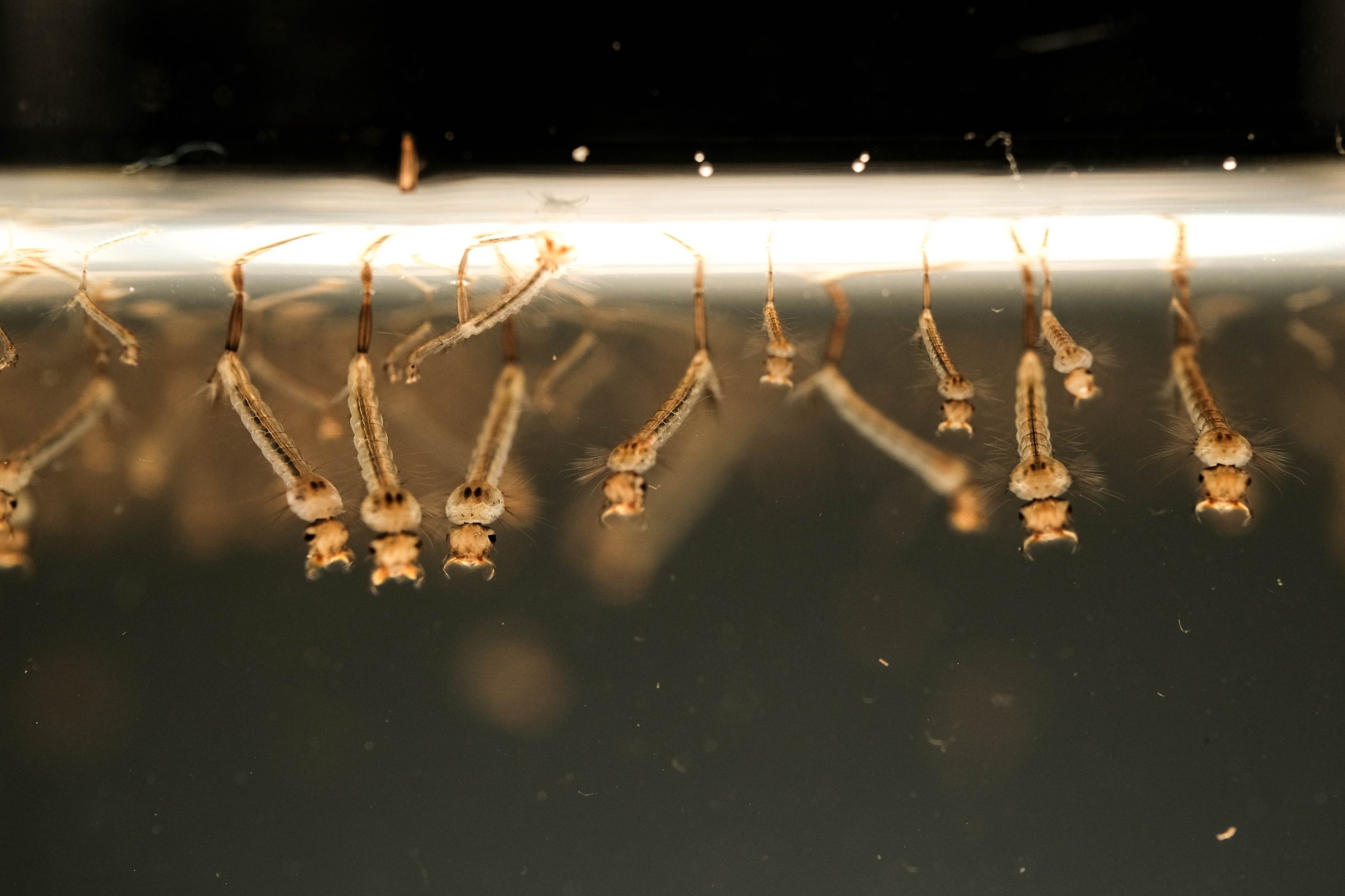
Every summer, mosquito control becomes a central topic across all media. However, according to a study conducted on an island in Southern Italy, although more than 80% of the population is aware of the problem and the possible solutions, only 15% actively takes action to reduce mosquito populations and the consequences are evident1. Since 2021, the number of Dengue cases has doubled year after year, reaching over 12.3 million cases by the end of August 2024, mainly in Asia2. At the same time, Chikungunya outbreaks have become stable and cyclical in Asia, Africa, and Europe, with particular concern in the Mediterranean basin.
Both Chikungunya and Dengue are just some examples of arboviral diseases transmitted by the Asian tiger mosquito, Aedes albopictus, which is now established in 16 European countries3. Thanks to a study conducted in 2023 on Ae. albopictus populations in central Paris, we know that this species can transmit Dengue, Zika, and Chikungunya, viruses typically associated with the Aedes genus. However, it may also transmit viruses such as Usutu or West Nile soon, traditionally associated with the Culex genus4.
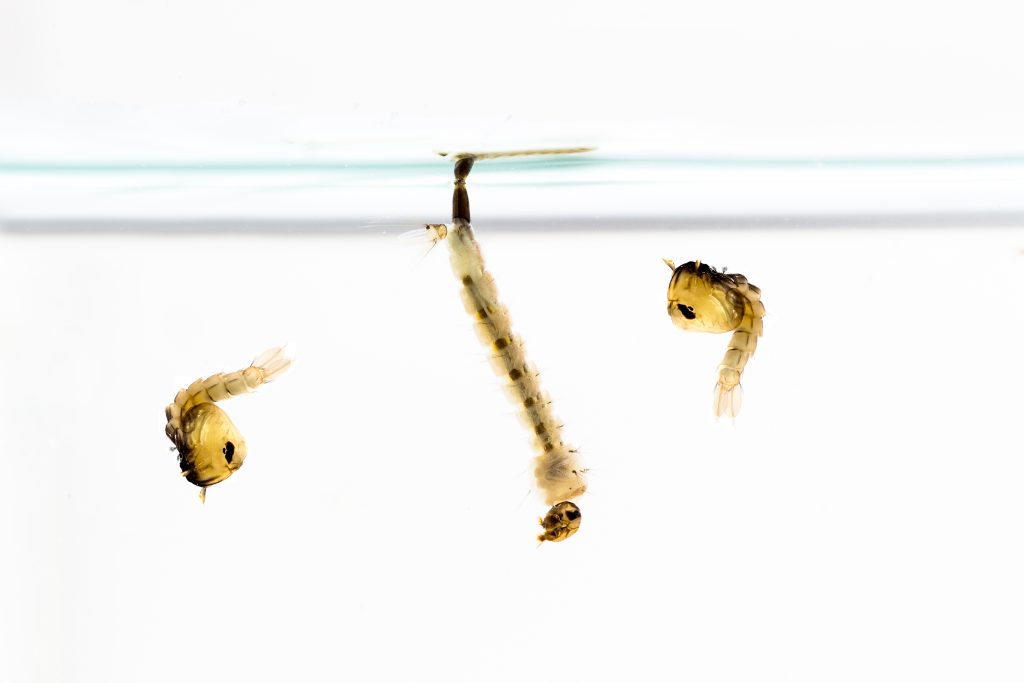
Regardless of where the “mosquito problem” occurs, the solutions are well known: preventive action by eliminating potential breeding sites is key. However, for some sites, such as drains, wetlands, or ditches, this is not always feasible, making larval control one of the most common approaches. In many countries, the use of synthetic active ingredients such as temephos, diflubenzuron, or pyriproxyfen is becoming increasingly restricted, due both to growing environmental awareness among citizens and public authorities and to the mosquitoes’ ability to develop resistance5. As a result, the introduction of biological solutions is becoming increasingly advantageous.
There is a solution that allows effective control of mosquito larvae while eliminating the risk of resistance and remaining within a biological control approach: Mosquitorex®. It is a blend of vegetable oils that, once applied to the water surface, spreads instantly to form a thin film that prevents the respiration of larvae and pupae and interferes with oviposition by adult females. Because it acts through a physical mechanism, the development of resistance is effectively reduced to zero. Moreover, based on conducted tests and the complete absence of hazard pictograms on the label, other insects and aquatic organisms are not negatively affected by the presence of Mosquitorex®.

Efficacy data from certified testing centers such as SAGEA, Entostudio, and Centro Agricoltura Ambiente “Giorgio Nicoli” in Italy, as well as research institutions like the University of Bangkok, clearly demonstrate that the product ensures 100% larval mortality within 48 hours, with environmental persistence of up to four weeks.
Mosquitorex® can be applied in all major breeding sites, including manholes, plant saucers, septic tanks, cisterns, and collection basins. In combination with Moskyp®, it is possible to treat hard-to-reach breeding sites throughout the entire season while minimizing operational effort.
Moskyp® is an intelligent dispenser, worldwide patented specifically designed to work with Mosquitorex®: it gradually releases the product by exploiting natural variations in temperature and humidity. Thanks to a fully physics-based mechanism, requiring no batteries or external energy sources, Moskyp® ensures protected environments for 7–8 months with a single application: just one 160 mL refill of Mosquitorex® at the beginning of the season.
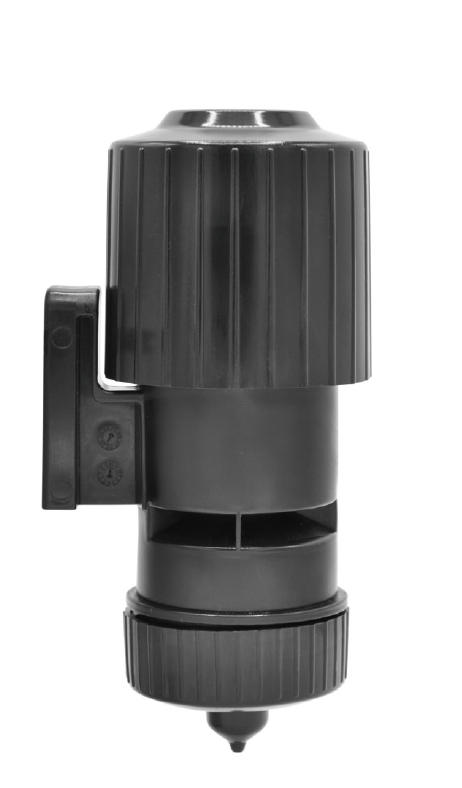
A practical example comes from Central Italy, where a pest control company installed 300 Moskyp® devices in hard-to-monitor drains located along the seafront and in public schools. Throughout the entire season, no mosquito larvae were detected in any of the treated drains, and the device was able to resume dispensing Mosquitorex® even after a flood event.
With Mosquitorex® and Moskyp®, Newpharm® provides two innovative solutions, already available in more than 20 countries, for effective mosquito control with full respect for the environment.
Bibliografia
- 1. Caputo B, Langella G, Petrella V, Virgillito C, Manica M, Filipponi F, et al. (2021) Aedes albopictus bionomics data collection by citizen participation on Procida Island, a promising Mediterranean site for the assessment of innovative and community-based integrated pest management methods. PLoS Negl Trop Dis 15(9): e0009698;
- 2. World Health Organization. (2024). WHO launches global strategic plan to fight rising dengue and other Aedes-borne arboviral diseases.
- 3. Lühken, R., Brattig, N., & Becker, N. (2023). Introduction of invasive mosquito species into Europe and prospects for arbovirus transmission and vector control in an era of globalization. Infectious Diseases of Poverty, 12(1), 109.
- 4. Martinet, J.-P., Ferté, H., Failloux, A.-B., Schaffner, F., & Depaquit, J. (2024). Aedes albopictus is a competent vector of five arboviruses affecting human health, greater Paris, France, 2023. Eurosurveillance, 29(20), 2400215.
- 5. Moyes, C. L., Vontas, J., Martins, A. J., Ng, L. C., Koou, S. Y., Dusfour, I., Raghavendra, K., Pinto, J., Corbel, V., David, J. P., & Weetman, D. (2017). Contemporary status of insecticide resistance in the major Aedes vectors of arboviruses infecting humans. PLOS Neglected Tropical Diseases, 11(7), e0005625
BLOG
Related news



Ask for information?
Newpharm® professionals will answer to all your doubts, contact us.